A leak that started with a specific storm is a different problem from one that crept in. The cause, the documentation and the repair sequence all change.
Storm damage and gradual deterioration are treated very differently, and the difference usually has to be demonstrated rather than asserted. What establishes it is the pairing of a dated weather event with physical damage consistent with that event — lifted edges, displaced ridge, impact marks — rather than simply the fact that a leak was noticed afterwards.
The evidence degrades faster than most people expect. Covering the roof, clearing debris and the next rainfall each remove part of it, usually within the first few days.
The evidence for a storm-related leak degrades fast — often within days. What gets recorded in the first day shapes what can be established afterwards.
A claim turns on a specific event. Tying the first appearance of water to a dated storm — and to what that storm actually did locally — is what separates sudden damage from gradual deterioration, which is treated very differently.
Temporary covering, clearing debris and even a first rain afterwards all remove evidence. Photographs taken before any of that are worth more than any description written later.
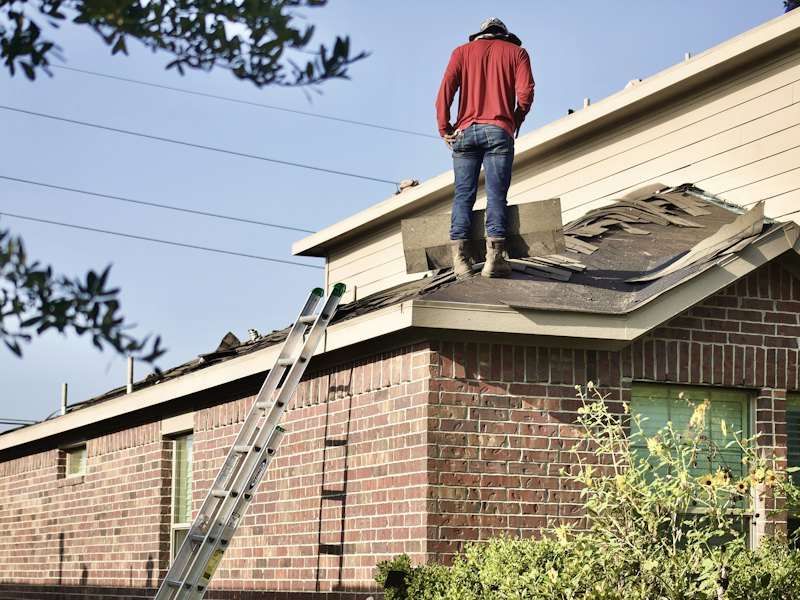
Lifted or missing coverings, displaced ridge, a bent or torn edge detail, debris impact marks. Wind damage is often visible only at the edges and the ridge, which are the hardest parts to see from the ground.
Covering has to stop further water entry while leaving the damage itself legible. These two goals conflict, and the order matters.
Storm damage frequently sits alongside a pre-existing weakness, and the honest scope says which is which rather than attributing everything to the storm.
Open sites take the worst of the uplift, and the damage concentrates at eaves, rakes and ridge. Those are the first places to record and the easiest to miss from below.
Reference point: the borough west of Paterson above the Passaic River.
Low density means larger roofs with more open exposure. Wind uplift at the eave and rake edges matters more here than in the sheltered streets of the dense river boroughs, and a lifted edge lets driven rain straight under the covering.
Edge detailing is worth checking on any exposed site after a wind event, whether or not there is a stain inside yet.
Low density across four square miles -- around two and a half thousand per square mile -- with a mix of detached residential and a significant amount of commercial property.
All areas coveredUseful to know before accepting any quote, because a scope that ignores these is a scope that will have to change later.
New Jersey adopts a single Uniform Construction Code and municipalities may not set lesser or greater technical requirements. A repair specified correctly in Passaic is specified correctly in Clifton.
Replacing more than a quarter of a roof surface within any twelve-month period triggers a full construction permit. Splitting one job into two smaller ones inside that window does not avoid it.
Northern New Jersey sits in the design zone where an ice barrier is required, running from the eave edge to at least twenty-four inches inside the interior wall line. On older roofs it is frequently absent, which shows up as recurring winter leaks at the eaves.
In Passaic the Uniform Construction Code is enforced by the city's Division of Code Enforcement, which is where permits for qualifying roof work are issued.
The same job in the areas next door, and the other leak types we handle in this one.
Answers are general guidance about how these roofs behave, not a survey of any particular building.
Yes, because the evidence degrades. Temporary covering, debris clearing and the next rainfall all remove it. Photographs taken before any of that are worth more than a description written weeks later.
Roofs here are larger and more exposed, so the edges matter more than the middle. After any wind event the eaves, rakes and ridge are worth checking even if nothing has shown inside yet.
Only if more than a quarter of the roof surface is replaced within a twelve-month period — that is the threshold under the New Jersey Uniform Construction Code. Most targeted leak repairs sit well under it, but the scope decides, not the label on the job.
Describe what you are seeing and when it started — that is usually enough to narrow the cause before anyone climbs anything.