Serving Passaic and the surrounding river towns Roof leaks only — that is the whole job
Flat Roof Leak Repair

Flat Roof Leak Repair in Totowa

Low-slope and flat roofs fail by holding water, not by shedding it. That changes both where the leak starts and how it has to be repaired.

Fix the drainage, not just the seam.

The word 'flat' is misleading: a low-slope roof is built with a deliberate fall, and almost every failure traces back to that fall no longer working. Settlement, an added mechanical unit, a blocked outlet or a compressed patch of insulation will each create a low spot, and the low spot is where the membrane is tested continuously instead of occasionally.

Totowa

Flat Roof Leak Repair, and what it actually involves

Where the water sits is more diagnostic than where the ceiling is wet. A puddle that survives two days of dry weather has already identified the part of the roof worth opening up.

  • The entry point is traced before anything is sealed
  • Pitched, flat and mixed roofs on pre-war stock
  • Scoped against the NJ Uniform Construction Code
  • Passaic and the surrounding river towns
(973) 381-5662
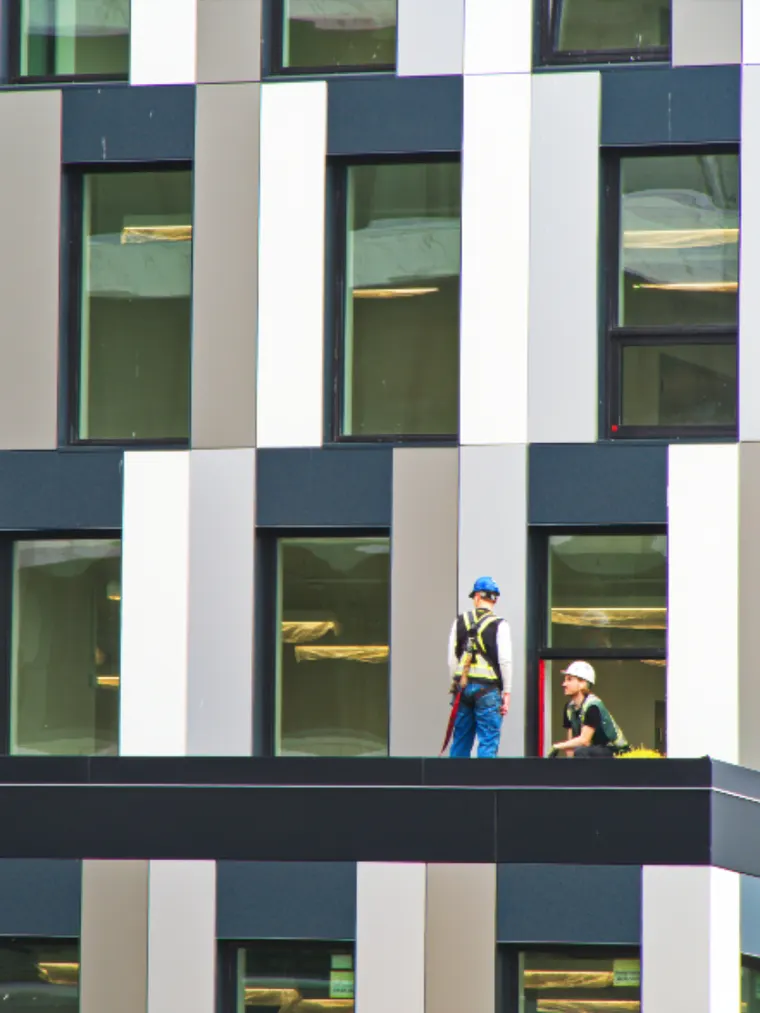
Two workers on a low-slope roof behind a parapet
Leaksonly
Low-slope roofs fail differently

On a flat roof, drainage is the first question — not the leak

Pitched roofs shed water and fail at details. Flat roofs hold water and fail wherever it sits longest. Treating one like the other is why flat roof repairs so often come back.

Ponding is the diagnosis, not the weather

A low-slope roof is designed to drain, slowly. Water still standing forty-eight hours after rain means the fall, the drains or the deck have changed — and every seam under that puddle is being tested continuously rather than occasionally.

Drains and scuppers before membrane

A blocked or undersized outlet turns the whole roof into a shallow tank. Repairing a seam under standing water without fixing why the water is standing there buys a season at best.

Seams, laps and terminations

On a low-slope roof the field of the membrane rarely fails first. The laps between sheets, the upstand where the membrane turns up a wall, and the termination bar at the top of that upstand take the stress.

Penetrations get checked individually

Every pipe, vent, mechanical curb and fixing through a flat roof is a separate detail that was sealed separately and ages separately. On a large roof these outnumber every other candidate combined.

Where water enters vs where it appears

Flat roofs separate those two points further than any other roof type. Water can travel the length of a deck between insulation and membrane before it finds a fixing hole and drops through.

What is under the covering matters

Wet insulation under an intact-looking membrane keeps a ceiling damp long after the entry point is sealed, and it will not dry on its own once it is sandwiched.

Applied to Totowa

What changes about this job here

The large single-span roofs at this density are where ponding does real damage: a shallow fall over a long distance leaves water standing for days after the rain has stopped.

Totowa — open and exposed

Reference point: the borough west of Paterson above the Passaic River.

On the ground in Totowa

What the buildings here are, and where they let water in

Where it typically fails

Low density means larger roofs with more open exposure. Wind uplift at the eave and rake edges matters more here than in the sheltered streets of the dense river boroughs, and a lifted edge lets driven rain straight under the covering.

Worth knowing locally

Edge detailing is worth checking on any exposed site after a wind event, whether or not there is a stain inside yet.

11,065Residents
4.00Square miles of land
2,766Per square mile
4,026Housing units
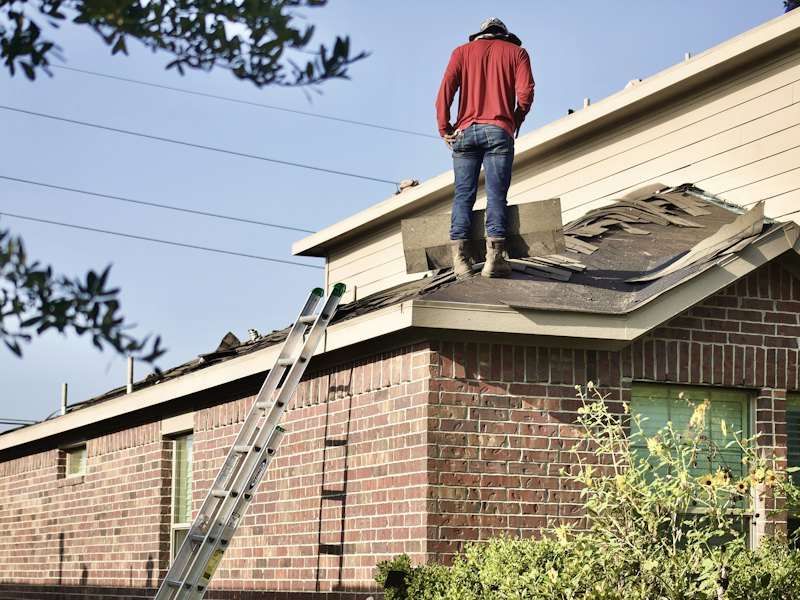
An old roof covering being stripped back
Totowacovered
Roofs in Totowa

What the roofs are like in Totowa

Low density across four square miles -- around two and a half thousand per square mile -- with a mix of detached residential and a significant amount of commercial property.

All areas covered
Local conditions

What this climate does to a roof

Passaic sits in a humid subtropical (Koppen Cfa) zone with a full freeze-thaw winter — the combination that is hardest on flashing and mortar.

Wind-driven rain finds laps

Rain arriving at an angle gets under flashing laps that shed vertical rain without difficulty. This is why a roof can be watertight for years and then leak in one particular storm from one particular direction.

Freeze-thaw opens what was already tired

Water that gets into a mortar joint, a lap or a hairline crack and then freezes expands. Northern New Jersey cycles through that repeatedly each winter, which is why small defects here do not stay small.

Snowmelt behaves unlike rain

Meltwater moves slowly under a snow layer and refreezes at the cold eave. That backs water up under the covering, where no amount of pitch helps, and it is the reason eave leaks appear in thaws rather than storms.

Nearby & related

Flat Roof work close to Totowa

The same job in the areas next door, and the other leak types we handle in this one.

Questions

Common questions

Answers are general guidance about how these roofs behave, not a survey of any particular building.

There is no obvious hole in my flat roof in Totowa. Where is it leaking?

Usually at a lap, an upstand or a penetration rather than in the open field. Water can also travel a long way between the membrane and the insulation before dropping through, so the entry point is often nowhere near the wet patch.

What is different about working on roofs in Totowa?

Roofs here are larger and more exposed, so the edges matter more than the middle. After any wind event the eaves, rakes and ridge are worth checking even if nothing has shown inside yet.

Will this need a permit?

Only if more than a quarter of the roof surface is replaced within a twelve-month period — that is the threshold under the New Jersey Uniform Construction Code. Most targeted leak repairs sit well under it, but the scope decides, not the label on the job.

Dealing with a roof leak in Totowa?

Describe what you are seeing and when it started — that is usually enough to narrow the cause before anyone climbs anything.