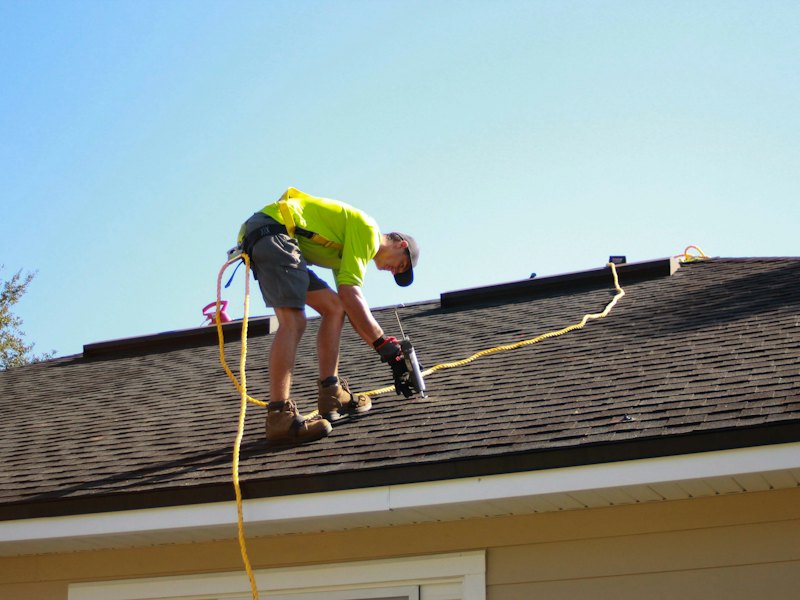
Water coming in now. The first job is to stop it spreading and protect what is underneath; the permanent repair follows once the roof can be worked on safely.
An active leak has two separate problems running at once: water entering the building, and water already inside it moving somewhere worse. They need different responses, and the second one is usually more urgent than people expect — a ceiling holding a few litres in a bulge is a structural risk, not a decorating one.
Stabilising a roof is not repairing it. Covering buys time in which the roof can be inspected properly, in conditions where the inspection is worth anything.
Most of the lasting damage from an active leak happens to what is underneath it, not to the roof. The order of operations matters more than speed.
Before anything structural, clear what is underneath. Water tracks along ceilings and finds light fittings and sockets, which is the part of a roof leak that becomes dangerous rather than merely expensive.
A ceiling holding water in a bulge will eventually come down in one piece. Relieving it deliberately — a small hole at the low point, a bucket underneath — is safer than waiting for it to fail on its own.
Temporary covering works only when it extends well past the suspected entry point and is secured at the top edge. A sheet laid over a wet area and weighted at the corners diverts water sideways and usually makes the interior damage wider.
What the weather was doing when it started — driven rain from one direction, sustained rainfall, snowmelt — narrows the diagnosis more than anything visible afterwards.
A stabilised roof is not a repaired roof. The diagnosis still has to happen in conditions where the roof can actually be walked and examined.
Density is the governing factor. Buildings this close share roof lines and drain into narrow gaps, rear additions tie into main roofs at shallow pitches, and downtown blocks are effectively one roof divided by parapets. Almost every leak starts at a junction between two things rather than in the middle of one.
Passaic's only land border is Clifton; Garfield, Wallington, Rutherford and East Rutherford are all across the Passaic River, reached by the Monroe Street, Passaic Street, Gregory Avenue, Market Street, Eighth Street and Union Avenue bridges.
Passaic is built at over twenty-two thousand people to the square mile on just over three square miles of land, in a stock of 21,513 housing units that is overwhelmingly pre-war — closely set two- and three-family houses, wall-to-wall commercial blocks downtown, and rear additions on almost everything.
All areas coveredUseful to know before accepting any quote, because a scope that ignores these is a scope that will have to change later.
New Jersey adopts a single Uniform Construction Code and municipalities may not set lesser or greater technical requirements. A repair specified correctly in Passaic is specified correctly in Clifton.
Replacing more than a quarter of a roof surface within any twelve-month period triggers a full construction permit. Splitting one job into two smaller ones inside that window does not avoid it.
Northern New Jersey sits in the design zone where an ice barrier is required, running from the eave edge to at least twenty-four inches inside the interior wall line. On older roofs it is frequently absent, which shows up as recurring winter leaks at the eaves.
In Passaic the Uniform Construction Code is enforced by the city's Division of Code Enforcement, which is where permits for qualifying roof work are issued.
Sections of Passaic first, then the surrounding municipalities.
Answers are general guidance about how these roofs behave, not a survey of any particular building.
Move anything underneath that water would ruin, and if the ceiling is bulging, relieve it deliberately with a small hole and a bucket rather than waiting for it to come down. Note what the weather was doing when it started.
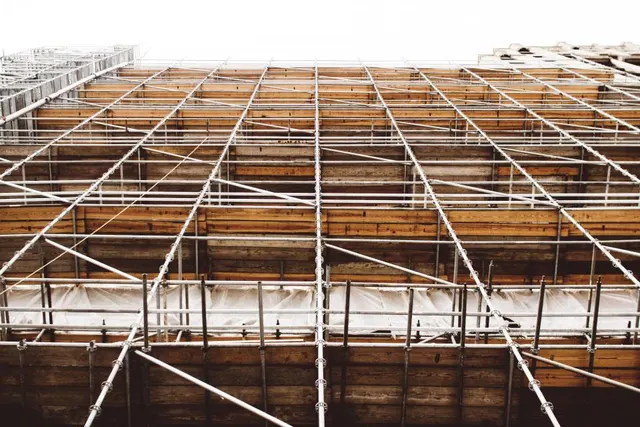
Access is the constraint, not the roof. At this density there is often no safe ground position for a ladder, so the roof has to be reached from inside the building or from a neighbouring one, and that has to be arranged before anyone can even look properly.
Only if more than a quarter of the roof surface is replaced within a twelve-month period — that is the threshold under the New Jersey Uniform Construction Code. Most targeted leak repairs sit well under it, but the scope decides, not the label on the job.
Describe what you are seeing and when it started — that is usually enough to narrow the cause before anyone climbs anything.