Serving Passaic and the surrounding river towns Roof leaks only — that is the whole job
Chimney Flashing Leak Repair

Chimney Flashing Leak Repair in Totowa

The single most common entry point on older pitched roofs: the joint where a masonry chimney passes through a roof that moves differently from it.

Establish whether it is the flashing or the chimney.

A chimney is the one part of a roof that is structurally independent of it. The masonry sits on its own footing and the roof deck moves seasonally around it, so the joint between them is worked constantly in a way no other detail on the roof is. That is why it fails first, and why a rigid repair across that joint tends not to last.

Totowa

Chimney Flashing Leak Repair, and what it actually involves

Four distinct faults produce one identical stain. Which of the four it is decides whether the work happens on the roof, on the chimney, or both.

  • The entry point is traced before anything is sealed
  • Pitched, flat and mixed roofs on pre-war stock
  • Scoped against the NJ Uniform Construction Code
  • Passaic and the surrounding river towns
(973) 381-5662
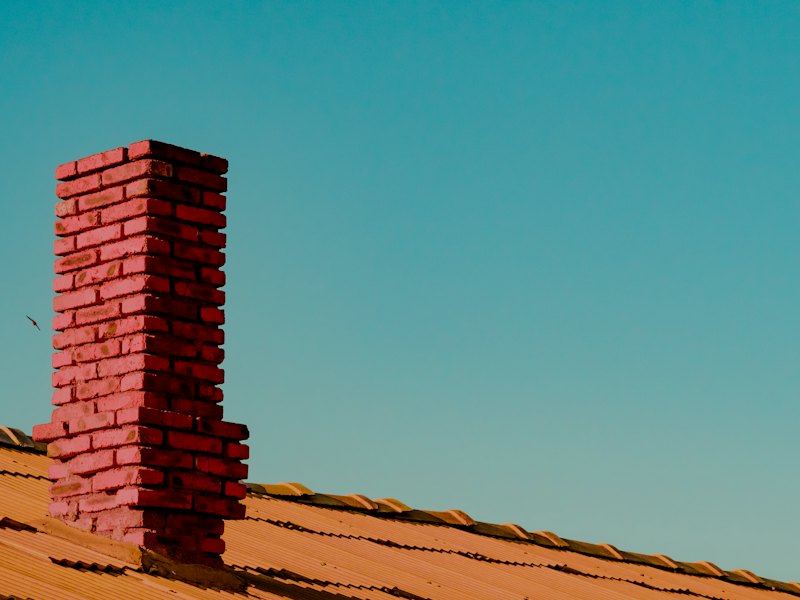
A brick chimney passing through a roof slope
Leaksonly
Four different faults, one symptom

A chimney leak is one of four things

They produce the same stain in the same place and need four different repairs. This is the most misdiagnosed leak on older pitched roofs.

Step flashing, up the sides

Individual pieces woven into each course as the roof was laid. When one lifts or corrodes, water enters at that course and runs down inside — often appearing well below the chimney and to one side of it.

Counter-flashing, into the masonry

The upper leaf, let into a mortar joint and turned down over the step flashing. Mortar joints erode; when that joint opens, the counter-flashing is still there but is no longer sealed into anything.

The cricket or saddle, on the upslope side

A chimney wider than about thirty inches needs a small ridged structure behind it to split the water flowing down the roof. Where one was never built, or has failed, the upslope face of the chimney is taking the entire catchment above it.

The chimney itself, above the roof line

An open or cracked crown, spalled brick or failed repointing lets water in above the roof entirely. No flashing repair fixes this, and it is routinely misdiagnosed as a flashing problem because the symptom is identical.

The distinction that decides the job

If water is entering through the masonry above the roof line, replacing the flashing will not stop it — and the roof will have been opened up for nothing. Establishing which of the four it is comes before any quote.

Applied to Totowa

What changes about this job here

Exposed chimneys take weather on all four faces, and the windward side loses its pointing first. The fault is often on the face nobody ever looks at from the ground.

Totowa — open and exposed

Reference point: the borough west of Paterson above the Passaic River.

On the ground in Totowa

What the buildings here are, and where they let water in

Where it typically fails

Low density means larger roofs with more open exposure. Wind uplift at the eave and rake edges matters more here than in the sheltered streets of the dense river boroughs, and a lifted edge lets driven rain straight under the covering.

Worth knowing locally

Edge detailing is worth checking on any exposed site after a wind event, whether or not there is a stain inside yet.

11,065Residents
4.00Square miles of land
2,766Per square mile
4,026Housing units
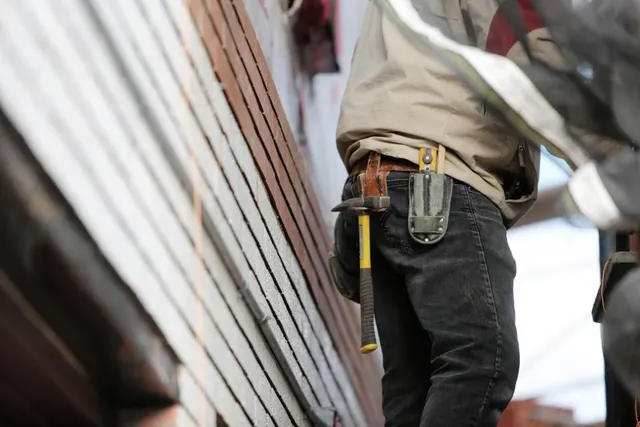
A roofer carrying hand tools across a shingle roof
Totowacovered
Roofs in Totowa

What the roofs are like in Totowa

Low density across four square miles -- around two and a half thousand per square mile -- with a mix of detached residential and a significant amount of commercial property.

All areas covered
The rules that actually apply

What New Jersey code requires on a roof repair

Useful to know before accepting any quote, because a scope that ignores these is a scope that will have to change later.

One code, statewide

New Jersey adopts a single Uniform Construction Code and municipalities may not set lesser or greater technical requirements. A repair specified correctly in Passaic is specified correctly in Clifton.

The 25% threshold

Replacing more than a quarter of a roof surface within any twelve-month period triggers a full construction permit. Splitting one job into two smaller ones inside that window does not avoid it.

Ice barrier at the eaves

Northern New Jersey sits in the design zone where an ice barrier is required, running from the eave edge to at least twenty-four inches inside the interior wall line. On older roofs it is frequently absent, which shows up as recurring winter leaks at the eaves.

Who enforces it here

In Passaic the Uniform Construction Code is enforced by the city's Division of Code Enforcement, which is where permits for qualifying roof work are issued.

Nearby & related

Chimney Flashing work close to Totowa

The same job in the areas next door, and the other leak types we handle in this one.

Questions

Common questions

Answers are general guidance about how these roofs behave, not a survey of any particular building.

How do I know if it is the flashing or the chimney itself?

They produce an identical stain. An open or cracked crown, spalled brick or failed pointing lets water in above the roof line entirely, in which case no flashing repair will stop it. That has to be established before the roof is opened up.

What is different about working on roofs in Totowa?

Roofs here are larger and more exposed, so the edges matter more than the middle. After any wind event the eaves, rakes and ridge are worth checking even if nothing has shown inside yet.

Will this need a permit?

Only if more than a quarter of the roof surface is replaced within a twelve-month period — that is the threshold under the New Jersey Uniform Construction Code. Most targeted leak repairs sit well under it, but the scope decides, not the label on the job.

Dealing with a roof leak in Totowa?

Describe what you are seeing and when it started — that is usually enough to narrow the cause before anyone climbs anything.