Water coming in now. The first job is to stop it spreading and protect what is underneath; the permanent repair follows once the roof can be worked on safely.
An active leak has two separate problems running at once: water entering the building, and water already inside it moving somewhere worse. They need different responses, and the second one is usually more urgent than people expect — a ceiling holding a few litres in a bulge is a structural risk, not a decorating one.
Stabilising a roof is not repairing it. Covering buys time in which the roof can be inspected properly, in conditions where the inspection is worth anything.
Most of the lasting damage from an active leak happens to what is underneath it, not to the roof. The order of operations matters more than speed.
Before anything structural, clear what is underneath. Water tracks along ceilings and finds light fittings and sockets, which is the part of a roof leak that becomes dangerous rather than merely expensive.
A ceiling holding water in a bulge will eventually come down in one piece. Relieving it deliberately — a small hole at the low point, a bucket underneath — is safer than waiting for it to fail on its own.
Temporary covering works only when it extends well past the suspected entry point and is secured at the top edge. A sheet laid over a wet area and weighted at the corners diverts water sideways and usually makes the interior damage wider.
What the weather was doing when it started — driven rain from one direction, sustained rainfall, snowmelt — narrows the diagnosis more than anything visible afterwards.
A stabilised roof is not a repaired roof. The diagnosis still has to happen in conditions where the roof can actually be walked and examined.
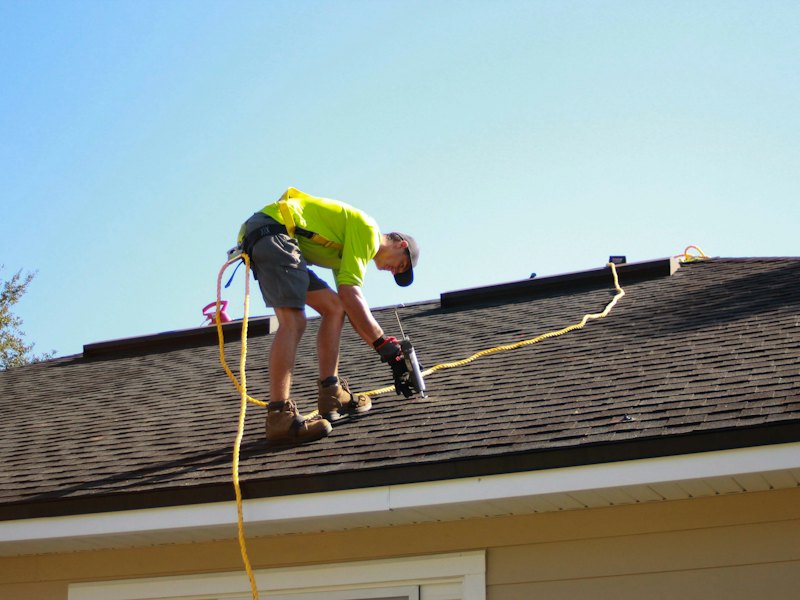
Access runs between buildings and through side gates. Where a ladder cannot be footed safely in the gap, the roof has to be reached from a different elevation than the one the leak is on.
Reference point: the city that forms Passaic's only land border, wrapping it to the north, south and west.
Because Clifton developed section by section rather than all at once, the right question is which part of the city a roof is in. A Botany Village roof and a Montclair Heights roof are different ages, different shapes and fail in different places.
Clifton is the one municipality reachable from Passaic without crossing water, which matters for how fast anyone can actually get to an active leak.
Far larger and markedly less dense than Passaic, and built out in distinct named sections -- Allwood, Athenia, Botany Village, Delawanna, Lakeview, Montclair Heights, Richfield and others -- each developed at a different time, so the housing stock varies sharply from one to the next.
All areas coveredPassaic sits in a humid subtropical (Koppen Cfa) zone with a full freeze-thaw winter — the combination that is hardest on flashing and mortar.
Rain arriving at an angle gets under flashing laps that shed vertical rain without difficulty. This is why a roof can be watertight for years and then leak in one particular storm from one particular direction.
Water that gets into a mortar joint, a lap or a hairline crack and then freezes expands. Northern New Jersey cycles through that repeatedly each winter, which is why small defects here do not stay small.
Meltwater moves slowly under a snow layer and refreezes at the cold eave. That backs water up under the covering, where no amount of pitch helps, and it is the reason eave leaks appear in thaws rather than storms.
The same job in the areas next door, and the other leak types we handle in this one.
Answers are general guidance about how these roofs behave, not a survey of any particular building.
Move anything underneath that water would ruin, and if the ceiling is bulging, relieve it deliberately with a small hole and a bucket rather than waiting for it to come down. Note what the weather was doing when it started.
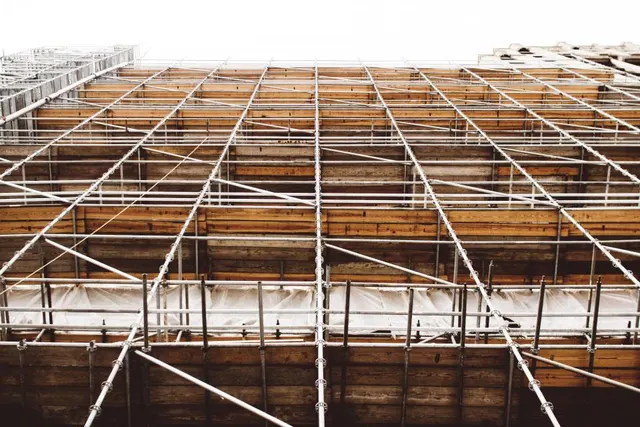
Buildings sit close enough that the work usually happens from the gap between them or over a side gate. Whether that gap is clear, and who controls it, often decides how quickly the roof can be examined.
Only if more than a quarter of the roof surface is replaced within a twelve-month period — that is the threshold under the New Jersey Uniform Construction Code. Most targeted leak repairs sit well under it, but the scope decides, not the label on the job.
Describe what you are seeing and when it started — that is usually enough to narrow the cause before anyone climbs anything.