Serving Passaic and the surrounding river towns Roof leaks only — that is the whole job
Chimney Flashing Leak Repair

Chimney Flashing Leak Repair in Clifton

The single most common entry point on older pitched roofs: the joint where a masonry chimney passes through a roof that moves differently from it.

Establish whether it is the flashing or the chimney.

A chimney is the one part of a roof that is structurally independent of it. The masonry sits on its own footing and the roof deck moves seasonally around it, so the joint between them is worked constantly in a way no other detail on the roof is. That is why it fails first, and why a rigid repair across that joint tends not to last.

Clifton

Chimney Flashing Leak Repair, and what it actually involves

Four distinct faults produce one identical stain. Which of the four it is decides whether the work happens on the roof, on the chimney, or both.

  • The entry point is traced before anything is sealed
  • Pitched, flat and mixed roofs on pre-war stock
  • Scoped against the NJ Uniform Construction Code
  • Passaic and the surrounding river towns
(973) 381-5662
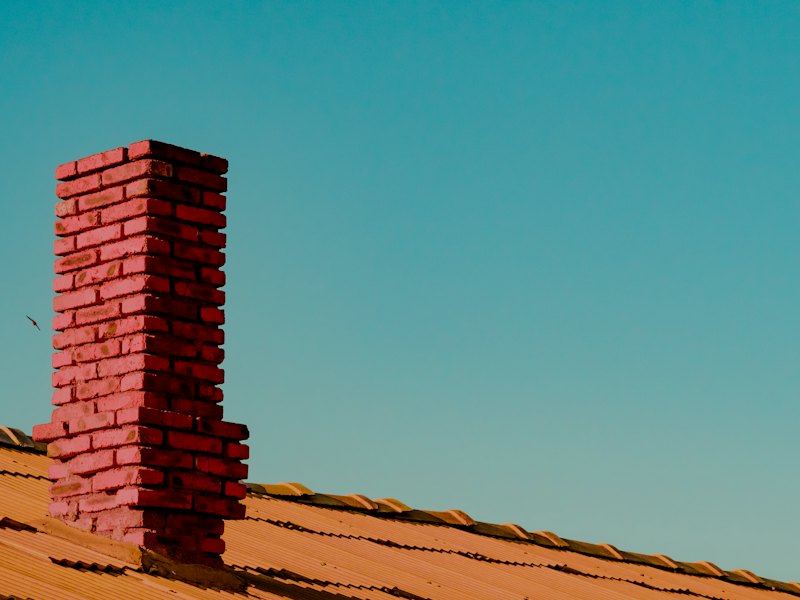
A brick chimney passing through a roof slope
Leaksonly
Four different faults, one symptom

A chimney leak is one of four things

They produce the same stain in the same place and need four different repairs. This is the most misdiagnosed leak on older pitched roofs.

Step flashing, up the sides

Individual pieces woven into each course as the roof was laid. When one lifts or corrodes, water enters at that course and runs down inside — often appearing well below the chimney and to one side of it.

Counter-flashing, into the masonry

The upper leaf, let into a mortar joint and turned down over the step flashing. Mortar joints erode; when that joint opens, the counter-flashing is still there but is no longer sealed into anything.

The cricket or saddle, on the upslope side

A chimney wider than about thirty inches needs a small ridged structure behind it to split the water flowing down the roof. Where one was never built, or has failed, the upslope face of the chimney is taking the entire catchment above it.

The chimney itself, above the roof line

An open or cracked crown, spalled brick or failed repointing lets water in above the roof entirely. No flashing repair fixes this, and it is routinely misdiagnosed as a flashing problem because the symptom is identical.

The distinction that decides the job

If water is entering through the masonry above the roof line, replacing the flashing will not stop it — and the roof will have been opened up for nothing. Establishing which of the four it is comes before any quote.

Applied to Clifton

What changes about this job here

Chimneys on closely built houses sit near party walls, where the flashing has to work alongside the neighbouring roof. That junction is harder to detail correctly and fails more often.

Clifton — closely built

Reference point: the city that forms Passaic's only land border, wrapping it to the north, south and west.

On the ground in Clifton

What the buildings here are, and where they let water in

Where it typically fails

Because Clifton developed section by section rather than all at once, the right question is which part of the city a roof is in. A Botany Village roof and a Montclair Heights roof are different ages, different shapes and fail in different places.

Worth knowing locally

Clifton is the one municipality reachable from Passaic without crossing water, which matters for how fast anyone can actually get to an active leak.

90,296Residents
11.27Square miles of land
8,008Per square mile
33,325Housing units
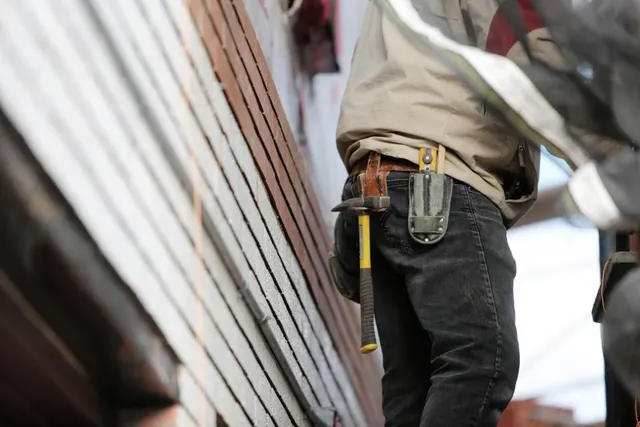
A roofer carrying hand tools across a shingle roof
Cliftoncovered
Roofs in Clifton

What the roofs are like in Clifton

Far larger and markedly less dense than Passaic, and built out in distinct named sections -- Allwood, Athenia, Botany Village, Delawanna, Lakeview, Montclair Heights, Richfield and others -- each developed at a different time, so the housing stock varies sharply from one to the next.

All areas covered
Local conditions

What this climate does to a roof

Passaic sits in a humid subtropical (Koppen Cfa) zone with a full freeze-thaw winter — the combination that is hardest on flashing and mortar.

Wind-driven rain finds laps

Rain arriving at an angle gets under flashing laps that shed vertical rain without difficulty. This is why a roof can be watertight for years and then leak in one particular storm from one particular direction.

Freeze-thaw opens what was already tired

Water that gets into a mortar joint, a lap or a hairline crack and then freezes expands. Northern New Jersey cycles through that repeatedly each winter, which is why small defects here do not stay small.

Snowmelt behaves unlike rain

Meltwater moves slowly under a snow layer and refreezes at the cold eave. That backs water up under the covering, where no amount of pitch helps, and it is the reason eave leaks appear in thaws rather than storms.

Nearby & related

Chimney Flashing work close to Clifton

The same job in the areas next door, and the other leak types we handle in this one.

Questions

Common questions

Answers are general guidance about how these roofs behave, not a survey of any particular building.

How do I know if it is the flashing or the chimney itself?

They produce an identical stain. An open or cracked crown, spalled brick or failed pointing lets water in above the roof line entirely, in which case no flashing repair will stop it. That has to be established before the roof is opened up.

What is different about working on roofs in Clifton?

Buildings sit close enough that the work usually happens from the gap between them or over a side gate. Whether that gap is clear, and who controls it, often decides how quickly the roof can be examined.

Will this need a permit?

Only if more than a quarter of the roof surface is replaced within a twelve-month period — that is the threshold under the New Jersey Uniform Construction Code. Most targeted leak repairs sit well under it, but the scope decides, not the label on the job.

Dealing with a roof leak in Clifton?

Describe what you are seeing and when it started — that is usually enough to narrow the cause before anyone climbs anything.