A leak that started with a specific storm is a different problem from one that crept in. The cause, the documentation and the repair sequence all change.
Storm damage and gradual deterioration are treated very differently, and the difference usually has to be demonstrated rather than asserted. What establishes it is the pairing of a dated weather event with physical damage consistent with that event — lifted edges, displaced ridge, impact marks — rather than simply the fact that a leak was noticed afterwards.
The evidence degrades faster than most people expect. Covering the roof, clearing debris and the next rainfall each remove part of it, usually within the first few days.
The evidence for a storm-related leak degrades fast — often within days. What gets recorded in the first day shapes what can be established afterwards.
A claim turns on a specific event. Tying the first appearance of water to a dated storm — and to what that storm actually did locally — is what separates sudden damage from gradual deterioration, which is treated very differently.
Temporary covering, clearing debris and even a first rain afterwards all remove evidence. Photographs taken before any of that are worth more than any description written later.
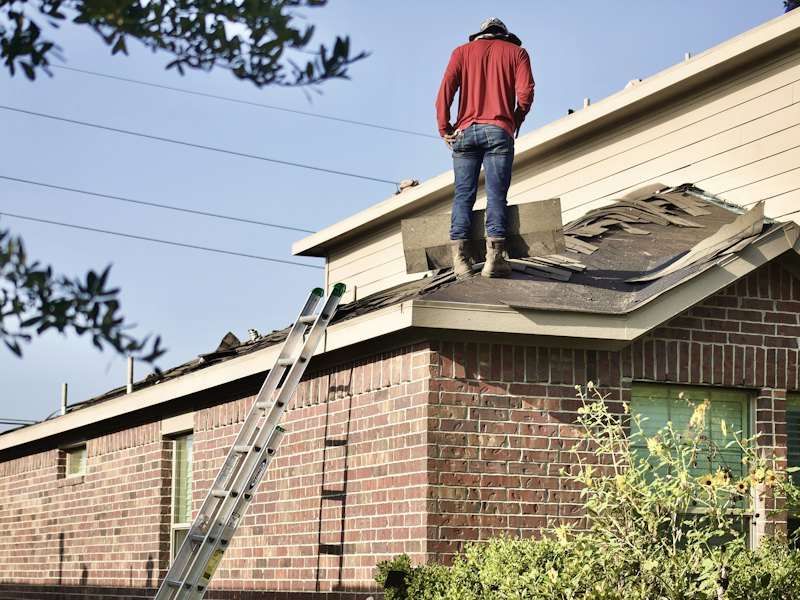
Lifted or missing coverings, displaced ridge, a bent or torn edge detail, debris impact marks. Wind damage is often visible only at the edges and the ridge, which are the hardest parts to see from the ground.
Covering has to stop further water entry while leaving the damage itself legible. These two goals conflict, and the order matters.
Storm damage frequently sits alongside a pre-existing weakness, and the honest scope says which is which rather than attributing everything to the storm.
Open sites take the worst of the uplift, and the damage concentrates at eaves, rakes and ridge. Those are the first places to record and the easiest to miss from below.
Reference point: the Meadowlands edge of the Passaic river towns.
The commercial and light-industrial buildings here carry big low-slope roofs where the failure mode is ponding and seam separation, not the shingle and flashing problems that dominate the dense residential boroughs upriver.
Exposure matters more here than in the sheltered street walls of Passaic: open sites take wind uplift at the roof edge that a hemmed-in city block never sees.
Low density by the standards of this area -- under three thousand per square mile -- with a mix of older borough housing and a large share of land given over to commercial and stadium-district use.
All areas coveredPassaic sits in a humid subtropical (Koppen Cfa) zone with a full freeze-thaw winter — the combination that is hardest on flashing and mortar.
Rain arriving at an angle gets under flashing laps that shed vertical rain without difficulty. This is why a roof can be watertight for years and then leak in one particular storm from one particular direction.
Water that gets into a mortar joint, a lap or a hairline crack and then freezes expands. Northern New Jersey cycles through that repeatedly each winter, which is why small defects here do not stay small.
Meltwater moves slowly under a snow layer and refreezes at the cold eave. That backs water up under the covering, where no amount of pitch helps, and it is the reason eave leaks appear in thaws rather than storms.
The same job in the areas next door, and the other leak types we handle in this one.
Answers are general guidance about how these roofs behave, not a survey of any particular building.
Yes, because the evidence degrades. Temporary covering, debris clearing and the next rainfall all remove it. Photographs taken before any of that are worth more than a description written weeks later.
Roofs here are larger and more exposed, so the edges matter more than the middle. After any wind event the eaves, rakes and ridge are worth checking even if nothing has shown inside yet.
Only if more than a quarter of the roof surface is replaced within a twelve-month period — that is the threshold under the New Jersey Uniform Construction Code. Most targeted leak repairs sit well under it, but the scope decides, not the label on the job.
Describe what you are seeing and when it started — that is usually enough to narrow the cause before anyone climbs anything.