Serving Passaic and the surrounding river towns Roof leaks only — that is the whole job
Skylight Leak Repair

Skylight Leak Repair near the Passaic Riverfront

A wet skylight is often not a leaking skylight. Separating a genuine seal failure from condensation and from a curb flashing problem decides what actually needs doing.

Three different faults, three different repairs.

The useful first question is when the water appears rather than where. Condensation peaks on cold, still, dry nights; a curb flashing fault tracks rain and wind direction; a failed glazing unit ignores both and simply gets worse. Establishing which pattern fits takes a few days of observation and costs nothing.

Riverfront

Skylight Leak Repair, and what it actually involves

Two of the three causes need no roof work at all. Ruling them out first is what prevents an unnecessary repair to a skylight that was never leaking.

  • The entry point is traced before anything is sealed
  • Pitched, flat and mixed roofs on pre-war stock
  • Scoped against the NJ Uniform Construction Code
  • Passaic and the surrounding river towns
(973) 381-5662
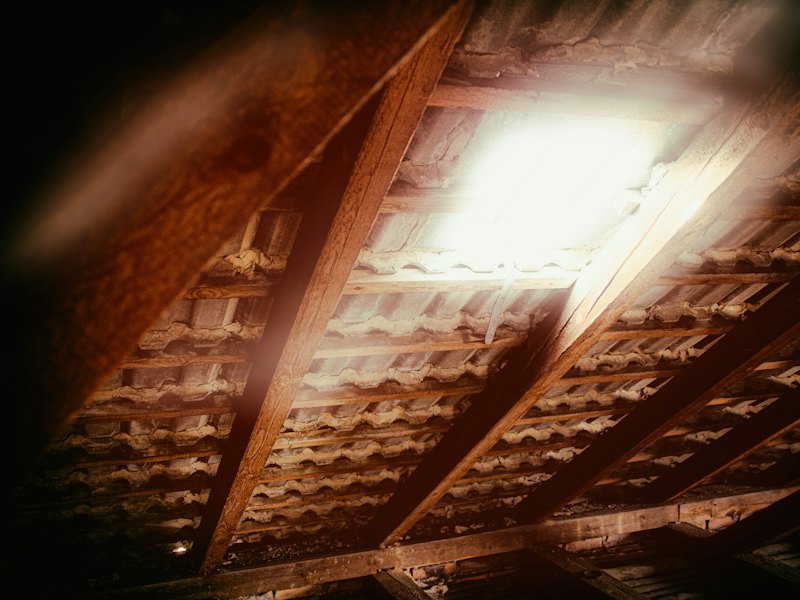
Daylight entering a loft through a rooflight, with the rafters visible
Leaksonly
Before assuming the roof

Two of the three causes are not roof problems

A wet skylight is one of the few roof complaints where the most likely answer needs no roof work at all. Ruling the other two out first is what stops an unnecessary repair.

Condensation, which is not a leak

A skylight is the coldest surface in a warm, humid room. Water forming on the inside of the glass and running down the reveal appears in cold weather, is worst in kitchens and bathrooms, and stops when the room is ventilated. No roof work will change it.

Seal failure at the glazing unit

The unit itself has failed — misting between panes, water at the glazing bar. This is a window fault rather than a roof fault, and it is solved by the unit, not by the roof around it.

Curb flashing, which is a roof fault

The skylight sits on a raised curb, and that curb is flashed into the roof like a small chimney: apron at the bottom, steps up the sides, head flashing at the top. Water entering here appears at the corners of the reveal and is worst in driven rain from one particular direction.

The age test that separates them

Condensation is worst on cold still nights with no rain at all. A curb flashing leak tracks rainfall and wind direction. A failed unit leaks regardless of both. Establishing which pattern fits takes observation, not a ladder.

Applied to Riverfront

What changes about this job here

Skylights are common on dense blocks because they are often the only daylight into an interior stair or a back room. Those are exactly the positions where condensation is worst, so ruling it out first matters more here than anywhere else.

the Passaic Riverfront — wall-to-wall density

Reference point: Passaic Riverfront Park and Pulaski Park along the Passaic River.

On the ground in the Passaic Riverfront

What the buildings here are, and where they let water in

Where it typically fails

Former industrial buildings almost all carry large low-slope roofs, and a low-slope roof fails by ponding rather than by running water off. Standing water finds a seam that a pitched roof would have shed before it mattered.

Worth knowing locally

Large single-span roofs need the drainage checked as part of any leak repair -- fixing a seam under a permanent puddle only buys time.

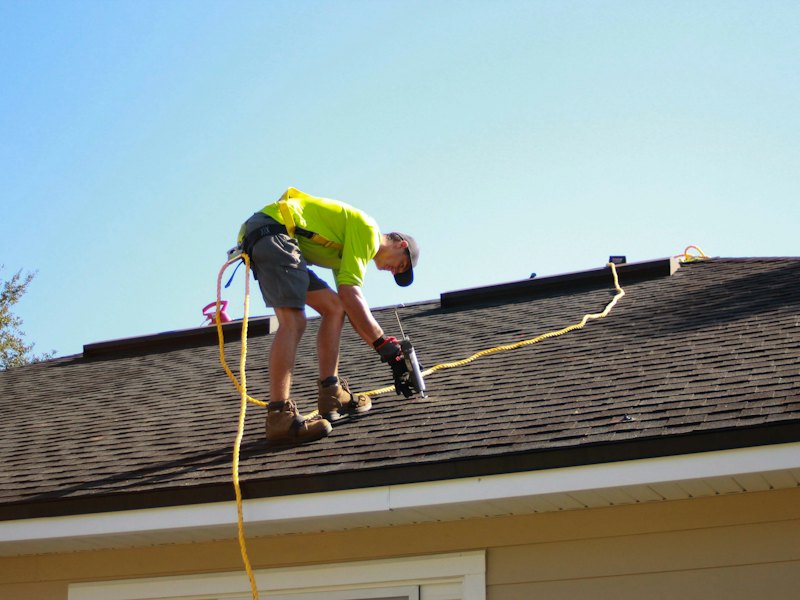
A roofer working on an asphalt shingle slope
Riverfrontcovered
Roofs near Riverfront

What the roofs are like near Riverfront

The blocks running along the river, historically the city's industrial edge, now a mix of older residential and former industrial buildings.

All areas covered
Local conditions

What this climate does to a roof

Passaic sits in a humid subtropical (Koppen Cfa) zone with a full freeze-thaw winter — the combination that is hardest on flashing and mortar.

Wind-driven rain finds laps

Rain arriving at an angle gets under flashing laps that shed vertical rain without difficulty. This is why a roof can be watertight for years and then leak in one particular storm from one particular direction.

Freeze-thaw opens what was already tired

Water that gets into a mortar joint, a lap or a hairline crack and then freezes expands. Northern New Jersey cycles through that repeatedly each winter, which is why small defects here do not stay small.

Snowmelt behaves unlike rain

Meltwater moves slowly under a snow layer and refreezes at the cold eave. That backs water up under the covering, where no amount of pitch helps, and it is the reason eave leaks appear in thaws rather than storms.

Nearby & related

Skylight work close to Riverfront

The same job in the areas next door, and the other leak types we handle in this one.

Questions

Common questions

Answers are general guidance about how these roofs behave, not a survey of any particular building.

My skylight is wet but it has not rained. Is it leaking?

Probably not. Condensation forms on the coldest surface in a warm humid room, which a skylight usually is. It is worst on cold still nights and improves with ventilation. A genuine leak tracks rainfall and wind direction instead.

What is different about getting at a roof near the Passaic Riverfront?

Access is the constraint, not the roof. At this density there is often no safe ground position for a ladder, so the roof has to be reached from inside the building or from a neighbouring one, and that has to be arranged before anyone can even look properly.

Will this need a permit?

Only if more than a quarter of the roof surface is replaced within a twelve-month period — that is the threshold under the New Jersey Uniform Construction Code. Most targeted leak repairs sit well under it, but the scope decides, not the label on the job.

Dealing with a roof leak near Riverfront?

Describe what you are seeing and when it started — that is usually enough to narrow the cause before anyone climbs anything.