Serving Passaic and the surrounding river towns Roof leaks only — that is the whole job
Skylight Leak Repair

Skylight Leak Repair in Lyndhurst

A wet skylight is often not a leaking skylight. Separating a genuine seal failure from condensation and from a curb flashing problem decides what actually needs doing.

Three different faults, three different repairs.

The useful first question is when the water appears rather than where. Condensation peaks on cold, still, dry nights; a curb flashing fault tracks rain and wind direction; a failed glazing unit ignores both and simply gets worse. Establishing which pattern fits takes a few days of observation and costs nothing.

Lyndhurst

Skylight Leak Repair, and what it actually involves

Two of the three causes need no roof work at all. Ruling them out first is what prevents an unnecessary repair to a skylight that was never leaking.

  • The entry point is traced before anything is sealed
  • Pitched, flat and mixed roofs on pre-war stock
  • Scoped against the NJ Uniform Construction Code
  • Passaic and the surrounding river towns
(973) 381-5662
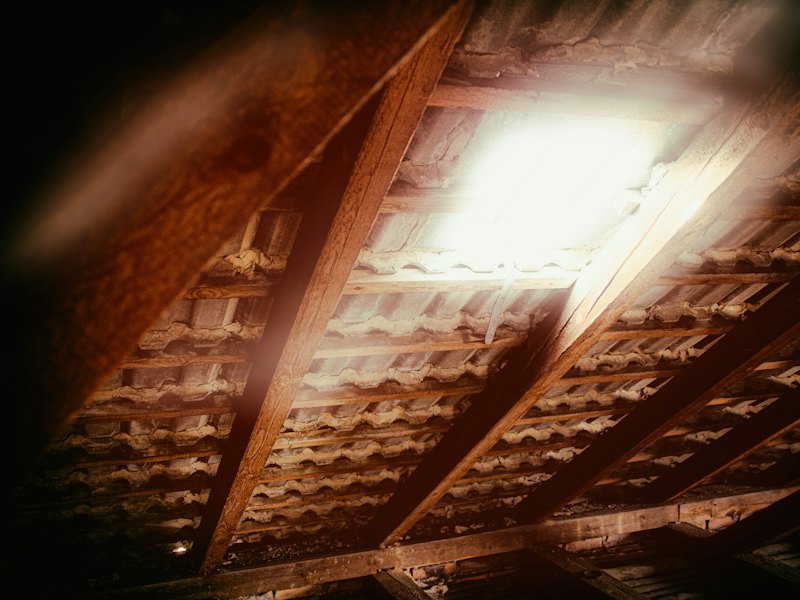
Daylight entering a loft through a rooflight, with the rafters visible
Leaksonly
Before assuming the roof

Two of the three causes are not roof problems

A wet skylight is one of the few roof complaints where the most likely answer needs no roof work at all. Ruling the other two out first is what stops an unnecessary repair.

Condensation, which is not a leak

A skylight is the coldest surface in a warm, humid room. Water forming on the inside of the glass and running down the reveal appears in cold weather, is worst in kitchens and bathrooms, and stops when the room is ventilated. No roof work will change it.

Seal failure at the glazing unit

The unit itself has failed — misting between panes, water at the glazing bar. This is a window fault rather than a roof fault, and it is solved by the unit, not by the roof around it.

Curb flashing, which is a roof fault

The skylight sits on a raised curb, and that curb is flashed into the roof like a small chimney: apron at the bottom, steps up the sides, head flashing at the top. Water entering here appears at the corners of the reveal and is worst in driven rain from one particular direction.

The age test that separates them

Condensation is worst on cold still nights with no rain at all. A curb flashing leak tracks rainfall and wind direction. A failed unit leaks regardless of both. Establishing which pattern fits takes observation, not a ladder.

Applied to Lyndhurst

What changes about this job here

Skylights here are usually in habitable rooms with better ventilation, which makes a genuine curb-flashing fault more likely than condensation.

Lyndhurst — mixed density

Reference point: the township along the Passaic River south of Rutherford.

On the ground in Lyndhurst

What the buildings here are, and where they let water in

Where it typically fails

A township this spread out has no single failure pattern, so the useful distinction is river-side versus inland: the older river blocks behave like Rutherford, the inland streets behave like Saddle Brook.

Worth knowing locally

Riverside exposure means wind-driven rain arrives at an angle, which finds flashing laps that shed vertical rain perfectly well.

22,519Residents
4.58Square miles of land
4,912Per square mile
8,787Housing units
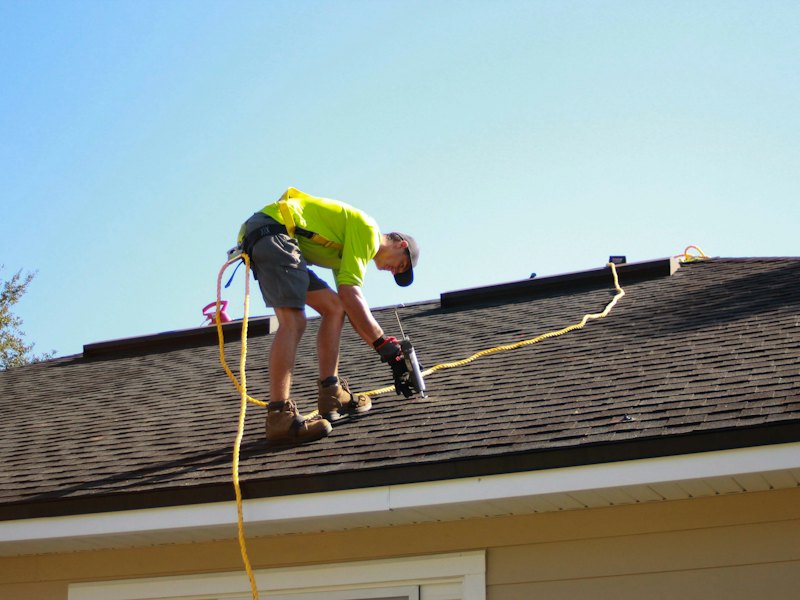
A roofer working on an asphalt shingle slope
Lyndhurstcovered
Roofs in Lyndhurst

What the roofs are like in Lyndhurst

Spread across four and a half square miles at moderate density, with a long river frontage and a stock running from older river-side housing to later suburban development inland.

All areas covered
The rules that actually apply

What New Jersey code requires on a roof repair

Useful to know before accepting any quote, because a scope that ignores these is a scope that will have to change later.

One code, statewide

New Jersey adopts a single Uniform Construction Code and municipalities may not set lesser or greater technical requirements. A repair specified correctly in Passaic is specified correctly in Clifton.

The 25% threshold

Replacing more than a quarter of a roof surface within any twelve-month period triggers a full construction permit. Splitting one job into two smaller ones inside that window does not avoid it.

Ice barrier at the eaves

Northern New Jersey sits in the design zone where an ice barrier is required, running from the eave edge to at least twenty-four inches inside the interior wall line. On older roofs it is frequently absent, which shows up as recurring winter leaks at the eaves.

Who enforces it here

In Passaic the Uniform Construction Code is enforced by the city's Division of Code Enforcement, which is where permits for qualifying roof work are issued.

Nearby & related

Skylight work close to Lyndhurst

The same job in the areas next door, and the other leak types we handle in this one.

Questions

Common questions

Answers are general guidance about how these roofs behave, not a survey of any particular building.

My skylight is wet but it has not rained. Is it leaking?

Probably not. Condensation forms on the coldest surface in a warm humid room, which a skylight usually is. It is worst on cold still nights and improves with ventilation. A genuine leak tracks rainfall and wind direction instead.

What is different about working on roofs in Lyndhurst?

Most properties here can be reached from their own ground, which makes inspection straightforward and generally means a smaller, better targeted repair than the same fault would need in the dense river boroughs.

Will this need a permit?

Only if more than a quarter of the roof surface is replaced within a twelve-month period — that is the threshold under the New Jersey Uniform Construction Code. Most targeted leak repairs sit well under it, but the scope decides, not the label on the job.

Dealing with a roof leak in Lyndhurst?

Describe what you are seeing and when it started — that is usually enough to narrow the cause before anyone climbs anything.